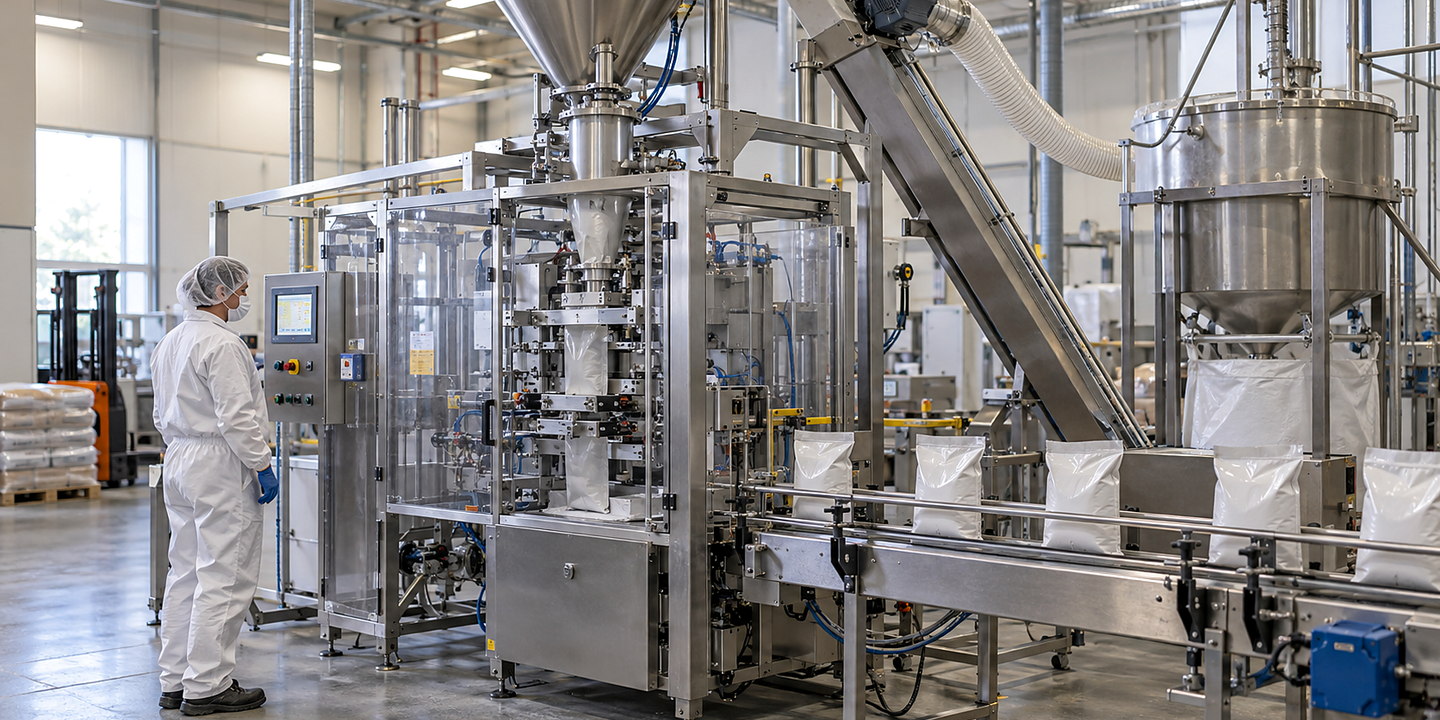
Compare coffee packing routes by product and bag format
Compare practical options for coffee beans and ground-coffee packing, including what each route needs, where it fits and what to check before you decide.
The right solution for coffee packing machines is the simplest system that reliably handles your stated duty, line connections and expected exceptions.
Plan coffee packing machines around your product, pack range, target output, cleaning needs and finished-pack checks. Discuss a practical line concept with Lancing using representative samples.
See how the complete system fits your production line — Coffee Packing Machines
Plan coffee packing machines around your product, pack range, target output, cleaning needs and finished-pack checks. Discuss a practical line concept with Lancing using representative samples. When you compare solutions, check how each option handles coffee beans & ground-coffee packing product behaviour, container, bag or pack range and your surrounding line.
Discuss your application

Separate dosing choice from bag choice
Whole beans: assess weighing and gentle transfer
Compare the way beans feed, settle and leave the dosing equipment. Inspect the fraction of broken beans after the complete transfer into the bag, not only at the hopper. A repeatable dose is still unsuitable if handling damages the intended presentation or leaves beans in the seal area.
Ground coffee: assess flow throughout the batch
Ground coffee may behave differently after storage, transport or aeration. When evaluating an auger or another powder-dosing route, compare consecutive fills at different hopper levels and after a pause. Record settled pack volume as well as weight, and check whether dust follows the filling nozzle into the closing zone.
Premade pouches: test opening and support
Use the production pouch, including zipper, gussets and any valve. The opening available to the nozzle can be more restrictive than the bag's outside width. Observe filling, withdrawal and the final closing operation, especially on the smallest bag or highest fill.
Roll film: assess the whole forming sequence
Film-fed equipment adds reel handling, bag forming, registration and longitudinal and end sealing. Compare changeover and startup waste with the proposed production schedule. Choose this route from the finished bag requirements and actual batch pattern, not from nominal machine speed alone.
Compare two coffees under the same review conditions
Choose a representative product and the most difficult product in the intended range. Hold the agreed packaging and inspection method constant, then record dose variation, retained product, visible dust, seal-area condition and interruptions for each. Explain any changed settings rather than treating the two runs as interchangeable.
Check the pack after it settles
Review usable headspace, zipper access and finished presentation after normal settling. If a valve or gas step is required, use the approved packaging and product-quality specification to define its checks. Neither a gas connection nor a valve alone establishes shelf life.
Count acceptable bags through a change
Include emptying, cleaning, reloading, recipe selection and first-off acceptance when comparing short-run options. This reveals the practical difference between a fast single-product cycle and a flexible day's production.
Use the coffee-packing selection guide to shortlist a route, then discuss the coffee and bag combination that needs a trial.
Help us give you useful guidance
- Representative Product and Container SamplesInclude the current revision and explain what this information should show for your operation.
- Fill-Weight or Pack-Quality ResultsInclude the current revision and explain what this information should show for your operation.
- Changeover and Cleaning ObservationsInclude the current revision and explain what this information should show for your operation.